“south america” search results (2000)

Introduction to the quality of Kenyan coffee varieties different from bourbon beans in Central and South America
Different from bourbon beans in Central and South America. This Kenyan native species was created by Scott Laboratories in 1930, known as SL for short. Agronomists wanted to find a kind of bourbon with high yield and resistance to diseases and insect pests, and obtained SL28 through experiments. SL28 is a genetic variant with a mixed pedigree of French missionaries, mochas and Yemens Tibica, which was originally cultivated for SL28.
2016-06-30 Different from Central and South American bourbon Kenya coffee variety quality type introduction
Introduction to Coffee Bean producing areas-- characteristics of Honduran Coffee from Honduras in South America
Well-known representative coffee: Honduran coffee seems strange to many coffee drinkers. When it comes to coffee production, the geographical conditions of Honduras are no less than those of neighboring coffee-producing countries such as Guatemala and Nicaragua. However, in the past, Honduras was more well-known in the consumer market because it did not have strong support in the handling and transportation of raw beans.
2016-03-28 Coffee beans producing areas introductions South America Honduras boutique coffee characteristics well-known
Introduction of Peruvian Coffee Variety characteristics of Fine Coffee Bean Flavor Manor
In 1542, the Spanish royal family set up the Government House in Lima and established the Governor's District of Peru, which became the center of Spanish colonial rule in South America. At that time, Peruvian commerce was prosperous, merchants controlled most of South America's import and export trade, and the precious metals and other goods looted by the Spaniards from South America were shipped out of Peru. The colonists encroached on land in Peru, forced the Mita system, and forced the Indians to
2016-09-22 Peru coffee introduction variety producing area characteristics boutique coffee beans flavor manor
Introduction to Coffee Bean producing areas-- characteristics of Mexican Fine Coffee in South America and Mexico
Well-known representative coffee: Mexico (Mexico) Malaggippe Mexico is close to the United States to the north. Its coffee production ranks fourth in the world, mainly produced in the southeast adjacent to the Vivette Nango highlands of Guatemala. Brother Mo, about 70% of his coffee is exported directly to the United States, which is washed and divided into three grades according to their height. Generally speaking, the evaluation of Mexican coffee is moderate.
2016-03-28 Coffee beans producing areas introductions South America Mexico boutique coffee characteristics well-known
The coffee-producing area of El Salvador, northwest of Central America and bordering the Pacific Ocean to the south, introduces the Iza of Sonsonate province.
In El Salvador, the coffee beans rich in the Kuskabapa region are the best, slightly lighter, fragrant, pure and slightly sour. Like Guatemala and Costa Rica, coffee in El Salvador is graded according to altitude, and the higher the altitude, the better the coffee. The best brand is Pip, whose quality has been recognized by the American Organic Certification Society. In addition
2016-06-22 Central America Northwest South Pacific El Salvador Coffee producing areas introduction S
World-famous individual coffee beans and their origin China Coffee net China Coffee Trading Network Latin America
Introduction] Latin American coffee beans (Central and South America) middot; Brazil: Santos (Santos), Bahia (Bahia), Syrador (Cerrado), Mojiana (Mogiana) middot; Mexico: Coatepec, Huatusco, Orezaba (Orizab Latin American coffee beans (Central and South America) Brazil
2016-04-22 World list coffee beans and their origin China coffee trading network Latin guide
Coffee bean producing areas-South America-Brazil (Brazil)
Well-known representative coffee: Santos Brazil is the world's largest coffee producer, with the first total output in the world, accounting for about 1% of the world's total output, mainly in the central and southern provinces. Brazil is suitable for growing coffee, the terrain is relatively flat, most coffee gardens are less than 1200 meters above sea level, and there is no shade from big trees, because the raw and ripe berries are harvested at the same time, so it is not a fine product.
2014-09-13 Coffee bean producing areas South America Brazil
Indonesian coffee Asian coffee has a higher alcohol thickness than Central and South America and African beans.
The mellow thickness of Asian coffee is higher than that of Central and South American and African beans, but its sour taste is lower, with slightly sunken wood, herb, spice and earthy flavor, and its low and stuffy aroma is higher than that of rising sour flavor. At the end of the 17th century, the Dutch East India Company transplanted Indian Arabica trees (Tibica) to Jakarta, Java. Due to the favorable climate and soil, Arabica quickly spread to Sumatra in Java.
2015-10-26 Indonesia coffee Asia thickness Central and South America Africa bean height thick
Panamanian Kasha flavor
Panama is located on the Panamanian isthmus in Central America, bounded by Colombia to the east, the Pacific Ocean to the south, Costa Rica to the west and the Caribbean Sea to the north. The territory is S-shaped to connect North and South America, and the Panama Canal connects the Atlantic and Pacific oceans from north to south. It is known as the bridge of the world. [5] Panama has a land area of 75517 square kilometers, a land length of 772km and a width of 60 to 1.
2016-08-29 Bana Marca Flavor Panama located in Central America Isthmus East Company Colombia
Guatemalan boutique coffee characteristics of Central and South America
Guatemala (Guatemala) aroma 3.5 minutes brightness 4.5 minutes mellow 3.5 minutes flavor 4.5 minutes aftertaste 4.5 points suitable for baking: Light/Medial/City shallow roasting, city degree can best show the characteristics of Guatemalan coffee, too deep will reduce the fruit flavor, if you like the smoky flavor, you can bake close to the second explosion, but still do not enter the second explosion as the principle. By
2016-05-10 Guatemala boutique coffee Central and South America producing areas characteristics Gua
Introduction to El Salvador Coffee beans El Salvador: Parkmara Coffee from South America
Many coffee lovers will not know the country of El Salvador, which is located in Central America, bordered by Guatemala and Honduras in the north, and the Pacific coastline in the west and south. El Salvador is the smallest country in Central America and the most densely populated country in Central America. The topography is mainly mountainous and plateau, with many volcanoes. Santa Ana active volcano is 2385 meters above sea level.
2016-04-27 El Salvador coffee coffee beans species introductions Parker Mara South America many
Coffee bean producing areas-South America-Brazil (Brazil)
Well-known representative coffee: Santos Brazil is the world's largest coffee producer, with the first total output in the world, accounting for about 1% of the world's total output, mainly in the central and southern provinces. Brazil is suitable for growing coffee, the terrain is relatively flat, most coffee gardens are less than 1200 meters above sea level, and there is no shade from big trees, because the raw and ripe berries are harvested at the same time, so it is not a fine product.
2015-01-04 Coffee beans producing areas South America Brazil famous representative coffee
Coffee producing area and coffee flavor introduction what kind of coffee producing area produces better coffee?
Coffee comes from coffee beans, which are harvested and processed from the fruit of trees. Coffee trees grow at the center of the equator, between latitudes of 25 degrees south and north, and are called the homes of tropical or subtropical countries called coffee belts. At present, there are about 60 coffee-producing countries. Coffee is produced in South America, Central America, the West Indies, Asia, Africa, Arabia, the South Pacific and
2016-05-23 Coffee producing area flavor introduction how better coffee is from coffee beans and
Coffee flavor in the Galapagos Islands of Ecuador, a coffee-producing region of South America.
Ecuador faces the Pacific Ocean, and near the equator, about 900km off its west coast, near the equator at 90 degrees west longitude, there is also a dependency of the Galapagos Islands (Galapagos Island), also known as Cologne, which produces the famous Galapagos coffee. In order to protect the natural ecology, the Ecuadorian government has designated the archipelago as a national park and banned the use of chemical fertilizers, pesticides and other chemical agents.
2016-06-14 South America coffee beans producing areas Ecuador Lapa Goss archipelago coffee flavor
Coffee beans in Central and South America Colombian flavor coffee
Columbia Coffee Columbia Coffee (Cafe de Colombia), which originated in Colombia, is one of the few individual coffees sold in the world under the name of the country. In terms of quality, it has won praise unmatched by other coffee. Compared with other producing countries, Colombia is more concerned with developing products and promoting production. It is this point, coupled with its superior geographical conditions and climatic conditions.
2016-04-28 Central and South America coffee beans Columbia flavor coffee
Salvadoran coffee beans Salvadoran coffee refers to Salvadoran hot spring coffee from South America
Many coffee lovers will not know the country of El Salvador, which is located in Central America, bordered by Guatemala and Honduras in the north, and the Pacific coastline in the west and south. El Salvador is the smallest country in Central America and the most densely populated country in Central America. The topography is mainly mountainous and plateau, with many volcanoes. Santa Ana active volcano is 2385 meters above sea level.
2016-04-27 El Salvador coffee beans coffee refers to produced in South America hot springs a lot of coffee friends
Introduction to the description and treatment of taste and flavor in the producing area of Peruvian coffee
In 1542, the Spanish royal family set up the Government House in Lima and established the Governor's District of Peru, which became the center of Spanish colonial rule in South America. At that time, Peruvian commerce was prosperous, merchants controlled most of South America's import and export trade, and the precious metals and other goods looted by the Spaniards from South America were shipped out of Peru. The colonists encroached on land in Peru, forced the Mita system, and forced the Indians to
2016-10-15 Peru coffee grinding characteristics variety producing area taste flavor description treatment
Salvadoran coffee Central and South American coffee beans
Salvadoran coffee refers to the coffee produced in the small South American country of El Salvador, where the coffee body is light, aromatic, pure, slightly sour, the flavor characteristic is excellent balance, is a specialty of Central America. With sour, bitter, sweet and other taste characteristics, the best baking degree is moderate, deep. The Chinese name Salvadoran coffee has a balanced taste and good texture.
2016-04-28 El Salvador coffee Central and South America coffee beans refers to produced in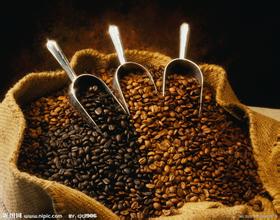
Coffee from Central and South America, the birthplace of Ethiopian coffee
Coffee trees come from Ethiopia, from wild coffee forests and semi-developed land to traditionally operated plots of land to modern plantations. About 50% of the coffee is grown more than 1500 meters above sea level. The flavor of Ethiopian coffee is difficult to describe. It is neither strong nor sour. Therefore, it is not suitable for deep baking, otherwise it is easy to lose.
2016-05-24 Ethiopia coffee birthplace Central and South America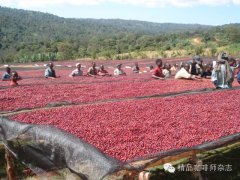
Waiqiang Plateau Coffee Manor Central and South America
High-quality coffee beans are refined by water treatment. The coffee beans with less impurities can be obtained by the water washing method, but if the water quality and time are not properly controlled during the fermentation process, the coffee beans will easily be infected with the sour taste of excessive fermentation. and dry beans also need to pay attention to timely re-inspection to prevent coffee beans from being contaminated by wet ground and sundries. Processed
2016-05-27 Huaiqiang Plateau Coffee Manor Central and South America Fine goods Coffee beans adopted Water treatment